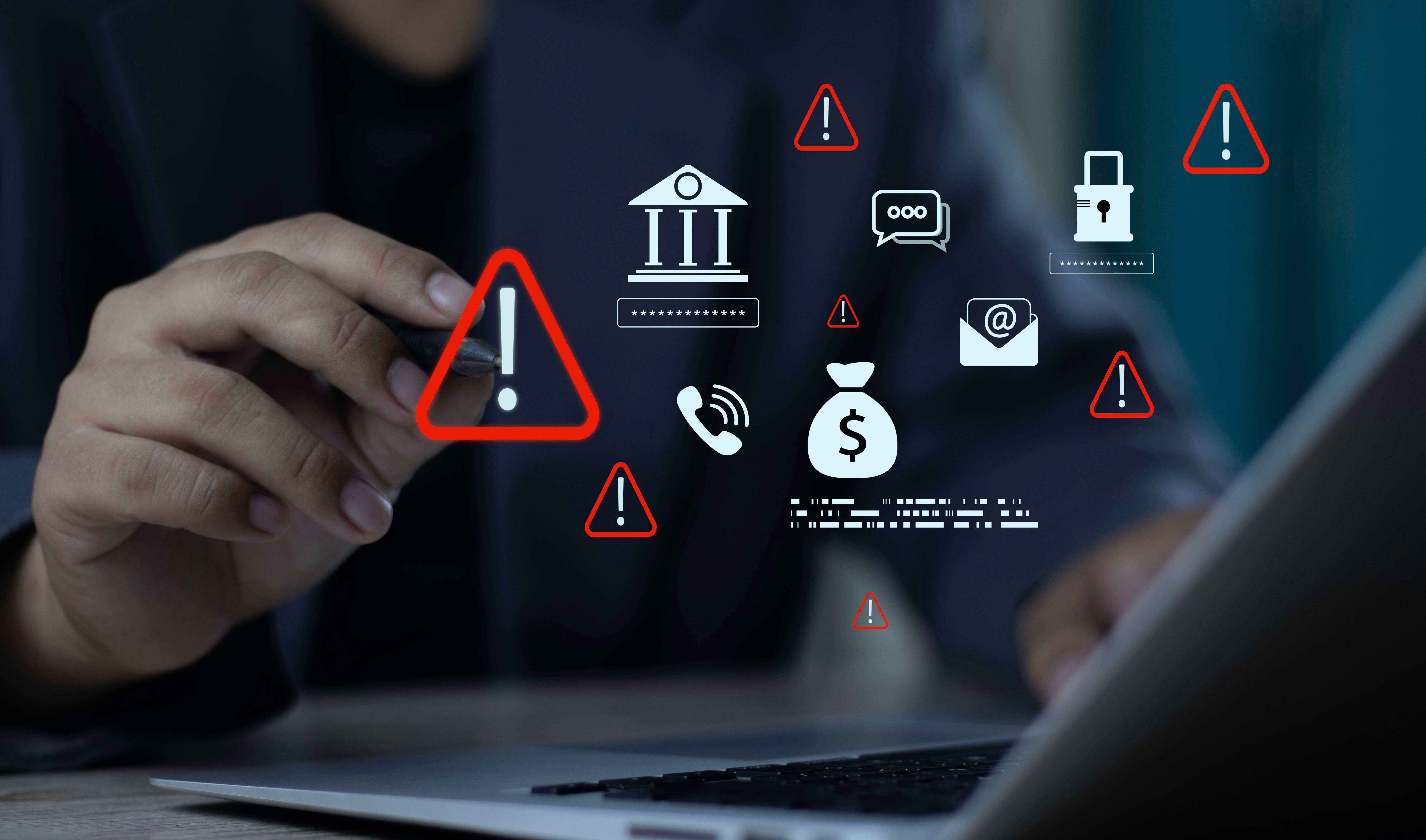
The lending landscape has seen dramatic shifts in recent years. Just a few years ago, the conversation centered on automation and streamlined processes. But today, that conversation has pivoted to fraud. Fraudsters are becoming more sophisticated, and their tactics are evolving faster than ever, with the help of Artificial Intelligence (AI). At Stearns Bank, we’ve made a deliberate choice: we’re strategically blending AI with human expertise to stay secure, without sacrificing the efficiency our customers deserve.
In a recent episode of Equifax’s Market Pulse Podcast, our very own Jill Molitor, Director of Fraud & Credit Administration, sat down with David Adams to discuss the shifting landscape of small business lending fraud and how we’ve pivoted to meet the moment.
Fraud in the Age of AI
The days of synthetic identity fraud being limited to consumer lending are far gone. Fraudsters have adapted their learnings from individual fraud schemes and weaponized them against small business lending. What Molitor calls “Frankenstein fraud” has become one of the most insidious types of AI-enabled fraud.
With the help of AI and dark web marketplaces, fraudsters construct completely fabricated identities, complete with legal names, Social Security numbers, dates of birth, physical addresses, and even photo identification. The scheme is calculated: apply for credit knowing that you’ll likely be denied, build a credit footprint, and eventually find a lender willing to say yes. Once approved, the fraudster can establish a credit profile, gradually escalating to larger purchases, and then they vanish—leaving the creditor with no recourse because this person or business never existed.
From a business perspective, this fraudulent activity has gained even more sophistication. Molitor explains that fraudsters are reactivating dormant Secretary of State filings, creating synthetic business identities, and pairing them with synthetic personal identities to convey the image of a legitimate individual who has been operating this business. To further validate fraudulent businesses, fraudsters are fabricating webpages that mimic legitimate businesses, while adding false phone numbers and webpage links that redirect users to their falsified websites.
From a banking perspective, the bad actors have checked all the boxes. They’ve provided the basic information and proof of business that has historically indicated a worthy applicant. But in today’s digital age, the playbook has become alarmingly complex.
Speed Vs. Caution: A False Choice
While the broader conversation has revolved around the balancing act of being quick and being careful, what Molitor has learned is: you don’t have to choose. What you have to do is think.
Traditional verification methods still hold value, but the “check the box” approach is no longer sufficient. We can’t stop at merely confirming names, addresses, and dates of birth. We must stop and ask ourselves strategic questions to prevent these bad actors from slipping through the cracks: Does the provided Social Security number belong to someone who realistically should already have an extensive credit history? Is the date of birth plausible given the company’s age or does that math suggest that something was fabricated along the way? These questions go beyond the capabilities of AI and require human judgment.
Consider a common scenario: a legitimate customer in Minnesota applies for financing to purchase equipment from a business that operates in Oregon and Washington. The geographic distance doesn’t guarantee fraud. People shop for deals across state lines every day. But it is a flag worth investigating. When you combine multiple flags like this, you begin to see patterns that could indicate fraudulent activity.
The AI Question We’re All Asking
Financial institutions have begun to implement AI strategically and cautiously, and for good reasons. We have a responsibility to protect customer data. But here’s the paradox: many fraudsters are using AI to commit fraud, which means we have to stay vigilant on both sides.
AI and machine learning can be powerful tools for fraud detection, but they can’t be used as standalone safeguards. They require human oversight and collaboration. For example, Molitor highlights that we can deploy these tools to conduct velocity checks to monitor how quickly certain events occur: multiple failed attempts on the same card or IP address, rapid account logins, out-of-pattern deposits, and more. These tools flag suspicious activity and alert our teams to investigate further.
But despite the efficiency of these tools, AI cannot ask the logical questions that the human brain can. If a business owner provides a date of birth that indicates they were nine years old when the business was founded, AI might pull this forward as a pink flag, but a human can stop to investigate whether there has been a change in ownership that would quell this concern. False positives cost money and frustrate legitimate customers, so the answer isn’t AI or human judgement alone. It’s both, working together in concert.
Looking at the Bigger Picture
One of the most valuable shifts we’ve made as an organization is moving away from siloed analysis. Individual data points tell a very limited story. A customer with a 675-credit score might be a reliable borrower with solid cash flow. Meanwhile, a customer with a 750-credit score might be drowning in debt. Neither number means much without context.
At Stearns, we’ve adopted a holistic approach to underwriting that examines various dimensions simultaneously. We assess both personal and business credit reports, consider affiliate businesses and global cash flow, and evaluate whether the business owner’s personal financial situation aligns with their business structure.
This comprehensive view often reveals opportunities we might otherwise miss. Upon further investigation, a startup with limited credit history might reveal that they’re strengthened by a cross-corporate guarantee from an established affiliate company. An applicant who initially appears risky might actually be part of a larger, more stable ecosystem. By asking questions and doing our due diligence, we find solutions instead of shutting doors.
What’s Next?
The truth is, there is no silver bullet here. Fraudsters will continue to evolve their tactics as long as the financial incentive remains. As Molitor says, our “crystal ball broke years ago,” and no amount of “future-proofing” changes that reality.
What we can do is pursue continuous improvement. We’ll keep leveraging both machine learning and human expertise. We’ll keep asking logical questions about the data we’re presented with and keep training internally and externally, so our teams and communities understand what trends to look for and how to protect themselves.
At Stearns Bank, small business lending is about partnership and growth. It’s not about catching every would-be fraudster while frustrating the legitimate business owners who simply want to improve their operations. When we strike that balance, everyone wins.
Have questions about fraud prevention or small business lending? Reach out. We’re here to help.

Related Posts
Share This


