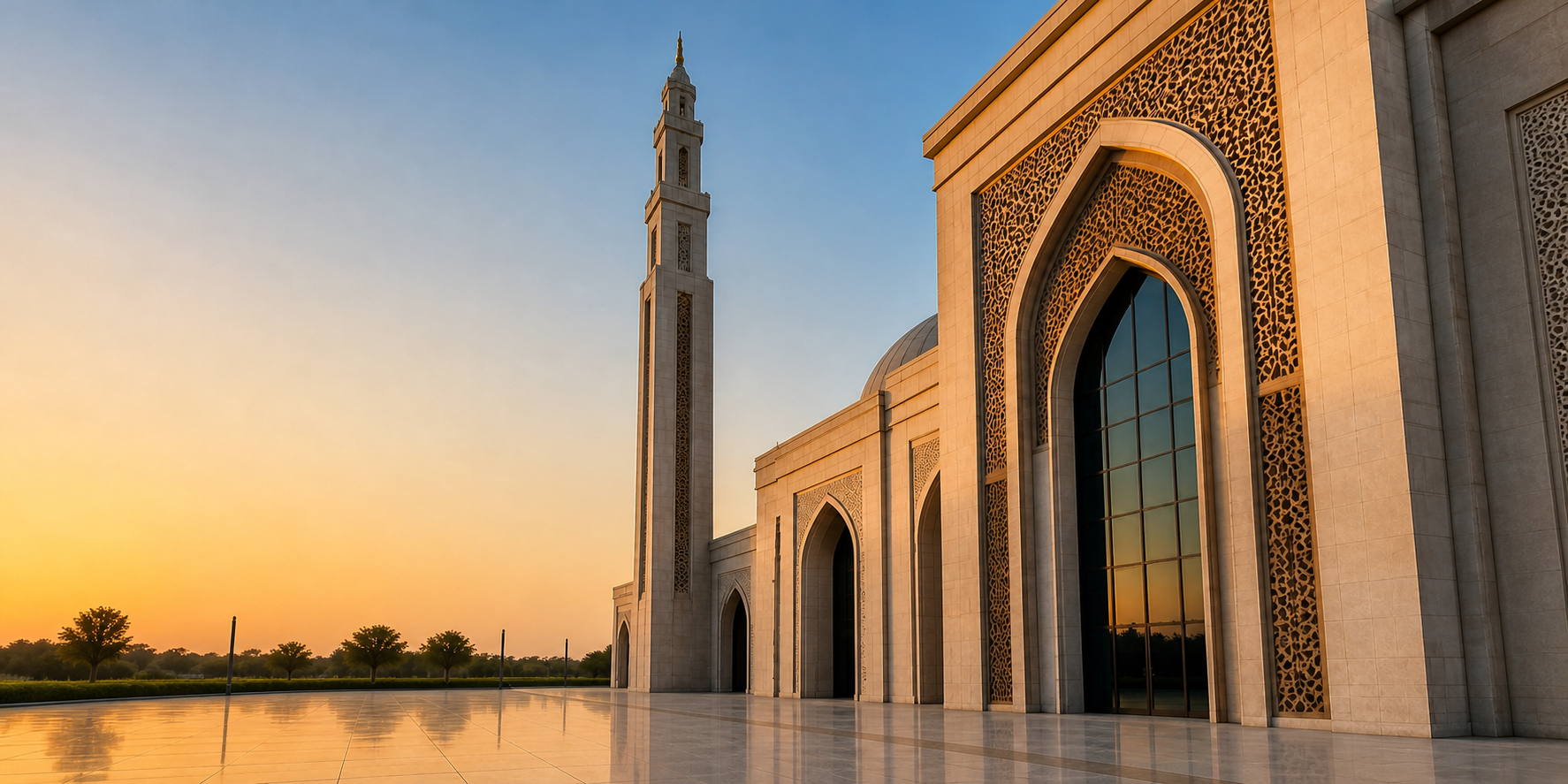
As Muslim communities continue to grow, many mosque leaders are asking the same questions: How do we gather the capital we need to expand? When is the right time to build? How do we manage rising construction costs? And, most importantly, how do we keep every dollar free of Riba (interest)?
Our recent webinar, “Financially Smart Mosque Expansion,” addressed these very questions and showed how mosque leaders can fund growth while staying true to their values. Here are the key takeaways.
Every expansion begins with a realistic budget. Go beyond core construction costs and account for all development requirements, including design, permitting, professional fees, furnishings, and contingency. Capturing these costs early gives your fellow leaders and board members an accurate target to work toward.
Donations from the community are a primary source of funding for most mosque projects. This generosity is the lifeblood of any community effort; but donations arrive on their own schedule, and construction bills rarely wait.
Before speaking with a financing institution, take stock of what you already have: equity, savings, and the donations you can count on. Compare that total to your budgeted project costs. The difference is your funding gap, and it indicates whether you need financing for your project.
If you do go down the financing route, remember that your donors give with the expectation that their contributions will remain Riba-free. Therefore, conventional interest-based loans would likely pose an ethical issue. Donors generally expect financing to align with Islamic principles, with asset-backed, Sharia-compliant solutions that protect both the financial health of the project and the trust of the community.
There are two common structures of Riba-free financing to explore:
- Murabaha (cost-plus sale). The bank purchases the asset and sells it to the mosque at its cost plus an agreed profit, which the mosque pays in installments. Any down payment is credited toward the price. The price is fixed at the time of sale.
- Ijarah (lease-based financing). Ijarah can be structured as a lease arrangement, and it is primarily used to acquire and refinance real estate and fund construction, including for non-profit organizations.
Structuring real estate transactions for religious organizations requires careful navigation of U.S. tax and nonprofit regulations. We encourage every organization to confirm its specific needs with its own legal and tax advisors.
Amanah (trust) is just as important. Stearns Salaam Banking products undergo rigorous end-to-end Sharia review, from validating the underlying concept and analyzing contracts to annual implementation audits by respected scholars from the Stearns Salaam Banking Sharia Supervisory Board including Mufti Ibrahim Essa, Shaykh Taha Abdul Basser, and Mufti Mirza-Zain Baig. This process safeguards the trust your donors place in your organization.
A campaign funded entirely in cash can take years and when construction stalls, donor enthusiasm often fades. The following measures can help you keep the momentum:
- Put your savings in a halal CD. Construction inflation has historically outpaced general inflation, so idle reserves can lose ground. Placing funds into halal savings accounts or CDs structured under Wakala (agency) can help close that gap for extra funds that aren’t being used.
- Monitored Construction Draws. Each month, the contractor submits a payment request, and an independent inspector verifies the completed work before funds are released. This protects the mosque from paying for incomplete work.
- Plan for affordability. We carefully review each community’s financial capacity. For communities with ambitious long-term visions, phased development is often recommended to preserve financial stability rather than overextend the organization.
Whether your community is acquiring property through Murabaha, opening checking and savings accounts that are kept separate from interest-bearing structures, or planning a multi-million-dollar expansion, Sharia-compliant financial solutions are making these projects more accessible than ever.
Ready to explore your options? The Stearns Salaam Banking team is ready to discuss your project. Contact our team to schedule a conversation or watch the full webinar recording for more information.
For informational and educational purposes only. Stearns Bank does not offer tax or legal advice. Please consult your tax advisor or legal representative to determine the implications of financing and business structuring. The views and opinions expressed on certain topics do not necessarily reflect the official position, views, or opinions of Stearns Bank N.A. Any examples provided are fictional and are for illustrative purposes only; they do not represent actual credit offers or commitments by the Bank.

Related Posts
Share This


